
Blog
Mini Traffic Lights: A Complete Guide

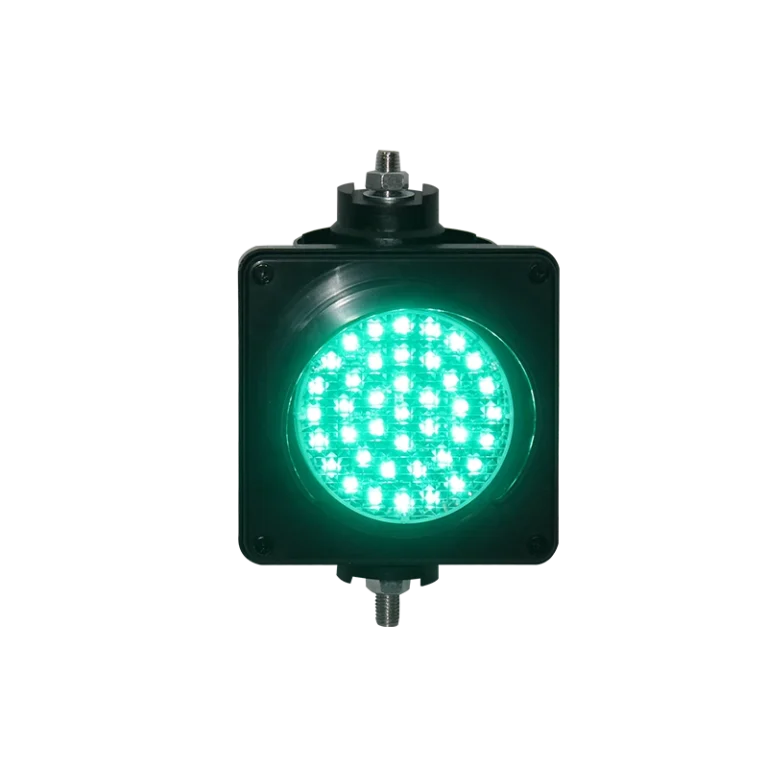
Mini traffic lights are compact versions of traditional traffic signal systems designed for situations where space, flexibility, and visibility are important. Although they are smaller in size, they can perform many of the same basic functions as standard traffic lights. They are commonly used for educational purposes, model roads, private properties, parking areas, temporary traffic management, and small-scale transportation projects.
These compact signals are available in different designs, colors, and operating systems. Some models work with simple switches, while others use programmable controllers, sensors, or timers. Their small size makes them convenient for projects where full-size traffic lights would be unnecessary or impractical.
What Are Mini Traffic Lights?
Mini traffic lights are small signal devices that use colored lights to control or communicate traffic movement. Like conventional traffic signals, they typically use three primary colors: red, yellow, and green.
- Red tells vehicles or users to stop.
- Yellow indicates caution or a transition.
- Green indicates that movement is permitted.
Depending on the application, mini traffic lights may be manufactured from plastic, metal, or other durable materials. They can use LED bulbs, which are popular because they provide bright illumination while consuming relatively little electricity.
How Do Mini Traffic Lights Work?
The working principle of mini traffic lights is relatively simple. An electronic circuit or controller determines which light should be illuminated at a particular time. In a basic three-light system, the controller follows a sequence that changes the lights from green to yellow and then red.
More advanced models can include programmable timing systems. These allow users to adjust how long each light remains active. Sensors can also be incorporated into certain systems to detect vehicles or objects and automatically change the signal.
Because LEDs can be controlled electronically, mini traffic lights can be connected to microcontrollers and educational development boards. This makes them particularly useful for students and hobbyists learning about electronics, programming, and automation.
Common Uses of Mini Traffic Lights
Mini traffic lights have a wide range of applications. Some of the most common uses include:
- Educational projects: Students can use them to understand traffic management, electronics, circuits, and programming.
- Model roads: Miniature cities and road layouts often use small traffic signals to create realistic displays.
- Parking areas: Small private parking facilities may use compact signals to organize vehicle movement.
- Industrial facilities: Factories and warehouses can use signal lights to manage vehicle or equipment movement.
- Construction projects: Temporary miniature or portable signals may be used in controlled environments.
- Decorative displays: They can be included in exhibitions, themed displays, and creative installations.
- Robotics projects: Small traffic signals are useful components in automated vehicle and robotics experiments.
Mini Traffic Lights for Educational Projects
One of the most popular applications of mini traffic lights is education. They provide a practical way for students to learn how real-world systems operate.
For example, a student can connect three LEDs to a microcontroller and program them to follow a traffic-light sequence. This project can introduce concepts such as electrical circuits, programming logic, timing, input and output signals, and automation.
Teachers can also use miniature traffic signals when explaining road safety. A physical model can make lessons more engaging because students can see how different signals work rather than simply reading about them.
Benefits of Using Mini Traffic Lights
Mini traffic lights offer several advantages. Their compact design means they require less installation space than conventional traffic signals. They are also generally lightweight and easier to transport.
Another benefit is energy efficiency, especially when LED technology is used. LEDs can provide strong visibility without requiring large amounts of electrical power.
Mini traffic lights can also be customized. Users may choose different housing designs, mounting options, voltage requirements, and control methods according to their project needs.
For educational and hobby applications, their relatively simple construction can make them easier to install and experiment with compared with full-size traffic-control equipment.
Types of Mini Traffic Lights
There are several types of mini traffic lights available for different purposes.
LED Mini Traffic Lights
LED models use light-emitting diodes instead of traditional bulbs. They are commonly selected for their brightness, efficiency, and long operating life.
Battery-Powered Mini Traffic Lights
Battery-powered models are useful when access to a permanent power source is limited. They can be convenient for demonstrations, portable displays, and temporary projects.
Programmable Mini Traffic Lights
Programmable versions can be connected to controllers such as microcontrollers or development boards. Users can create customized sequences and timing patterns.
Solar-Powered Mini Traffic Lights
Some compact traffic-light systems can incorporate solar power. These systems may be suitable for outdoor demonstrations and locations where reducing dependence on conventional electricity is desirable.
Features to Consider When Choosing Mini Traffic Lights
Before purchasing or building mini traffic lights, several features should be considered.
Size is important because the signal should fit the intended installation area. For model roads, a very small unit may be appropriate, while larger private installations may require a more visible design.
Light brightness is another important factor. If the signal will be used outdoors, it should be sufficiently bright to remain visible under daylight conditions.
Power requirements should also be checked. Some models operate using batteries, while others require an external power supply.
Control options can range from manual switches to automatic timers and programmable controllers.
Finally, consider construction quality and weather resistance if the device will be exposed to outdoor conditions.
Mini Traffic Lights and Smart Technology
Modern mini traffic lights can be integrated with smart technologies. Sensors, microcontrollers, wireless communication, and automation systems can transform a basic signal into an interactive device.
For example, a sensor could detect an approaching object and send information to a controller. The controller could then change the signal according to programmed rules.
These systems can be particularly valuable in educational technology projects because they combine hardware and software. Students can experiment with sensors, programming, and automated decision-making while creating a miniature traffic-management system.
Mini Traffic Lights in Model Cities
Miniature traffic signals are an excellent addition to model cities and scale road systems. They help make model environments look more realistic and can also demonstrate how intersections function.
A model city may include roads, pedestrian crossings, vehicles, street signs, and traffic signals. By connecting the lights to a controller, the entire system can operate automatically.
Such projects are often used for school exhibitions, science fairs, engineering demonstrations, and hobby displays.
Safety Considerations
Although mini traffic lights are generally simple devices, electrical safety should still be considered. Users should select a power supply that matches the manufacturer’s specifications and avoid exposing non-weatherproof electronics to moisture.
When building a circuit, connections should be properly insulated and components should be installed securely. Children should work with electronic projects under appropriate adult supervision.
It is also important to remember that miniature traffic lights should not be assumed to have the same legal authority or traffic-control function as official road signals. Their use should be limited to suitable private, educational, decorative, or controlled environments unless the equipment and installation meet applicable requirements.
Future of Mini Traffic Lights
As electronics and automation continue to develop, mini traffic lights are becoming more versatile. Smart sensors, programmable controllers, wireless communication, and energy-efficient LEDs can make compact signal systems increasingly sophisticated.
Future educational and hobby projects may combine mini traffic lights with cameras, artificial intelligence, connected sensors, and automated vehicles. These technologies can provide realistic demonstrations of how intelligent transportation systems operate.
Conclusion
Mini traffic lights are compact, flexible, and useful devices with applications ranging from education and model cities to private traffic management and technology demonstrations. Their small size makes them easy to incorporate into projects, while LED technology provides bright and efficient illumination.
Whether used in a school science project, a miniature city, a robotics experiment, or an automated display, mini traffic lights offer a practical way to explore the principles of traffic control and electronic automation. With programmable controls and smart sensors, they can also serve as an introduction to modern intelligent transportation technologies.


HappyMod: A Complete Guide to the Popular Modded App Platform

Kicker and Kicker Online: A Complete Guide to Football Gaming and Entertainment

Blackops Uncovered: The Full Covert Operations Guide

Gareth Varey: The Architect of Modern Artist Management

Liza Tarbuck Illness: Health, Career, and Public Awareness

son simon now simon anthony blackburn: From Celebrity Son to Private Life
-
 Fashion7 months ago
Gareth Varey: The Architect of Modern Artist Management
-
 CALEBRITIES8 months ago
Liza Tarbuck Illness: Health, Career, and Public Awareness
-
 Business8 months ago
son simon now simon anthony blackburn: From Celebrity Son to Private Life
-

 Politics7 months ago
Jeffrey Donaldson Daughter Claire: Family Life, Privacy, and Personal Influence
-

 Entertainment8 months ago
Alice Bhandhukravi Illness: Separating Fact from Rumor and Understanding Her Health Status
-

 Politics8 months ago
Piers Pottinger: A Comprehensive Profile of a PR and Corporate Communications Veteran
-

 Business8 months ago
Is Peter Cardwell Married? A Deep Dive Into His Life, Career, and Personal Relationships
-

 Sports7 months ago
Desislava Bozhilova Married: Exploring Public Curiosity and a Strongly Guarded Private Life