
Blog
The Ultimate Guide to Graphite Plates: Properties, Industrial Applications, and Future Innovations

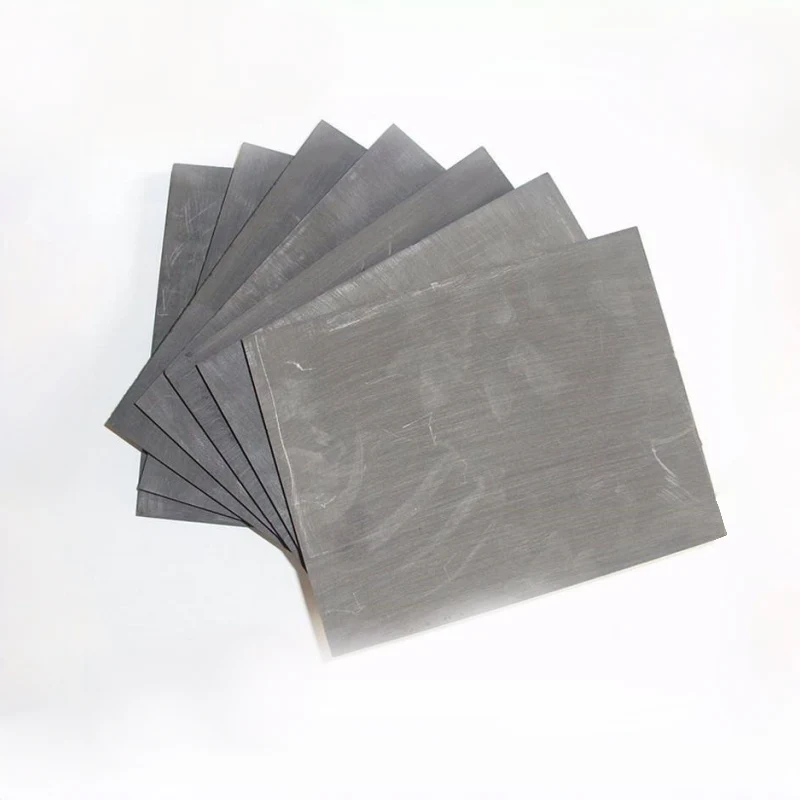
Graphite plates have quietly become one of the most critical foundational elements of modern industrial technology. Formed from pure carbon structured in a distinct hexagonal lattice, these flat, highly durable components boast a unique combination of thermal, chemical, and electrical properties that few other materials can match. From powering clean energy systems to enabling precise metallurgy and high-temperature manufacturing, graphite plates serve as the silent workhorses behind many of today’s advanced engineering solutions.
What Are Graphite Plates?
At their core, graphite plates are flat structural sheets engineered from natural or synthetic graphite. Graphite itself is an allotrope of carbon, where carbon atoms link in two-dimensional hexagonal sheets. Because the bonds between these horizontal layers are relatively weak compared to the strong covalent bonds within each layer, graphite exhibits remarkable lubricity and anisotropy.
To manufacture high-performance graphite plates, manufacturers typically compress synthetic graphite powders along with specialized pitch binders under intense pressure and extreme heat through process cycles like isostatic pressing, extrusion, or vibration molding. The resulting plates are dense, rigid, highly pure, and customized for specific thermal or electrical demands.
Exceptional Physical and Chemical Properties
The widespread adoption of graphite plates across diverse industries is directly linked to their unique material properties:
- Extreme Thermal Resistance: Graphite handles extreme temperatures gracefully. Unlike most metals, which weaken or melt as temperatures rise, graphite actually increases in mechanical strength at elevated temperatures up to nearly 2,500°C.
- Superior Electrical and Thermal Conductivity: The free electrons within graphite’s carbon layers allow electricity and heat to move through the plate with minimal resistance, making it an ideal conductor for electrical processes.
- Chemical Inertness: Graphite is highly resistant to corrosive acids, alkalis, and solvents, allowing graphite plates to maintain structural integrity in highly aggressive chemical environments.
- Low Thermal Expansion: With a remarkably low coefficient of thermal expansion (CTE), graphite plates retain their shape and dimensions despite rapid or severe temperature fluctuations.
- Self-Lubricating and Friction Resistant: The layered atomic structure gives the material low friction qualities, making it ideal for high-friction mechanical components without requiring additional lubricants.
Major Industrial Applications of Graphite Plates
Because of their versatile nature, graphite plates are deployed across an extensive range of high-tech and traditional manufacturing fields.
Fuel Cells and Hydrogen Technology
In proton exchange membrane (PEM) fuel cells, specialized bipolar graphite plates act as the main structural backbone. They distribute hydrogen fuel and oxygen evenly across the cell, conduct electric current out of the system, and channel away heat and water. Their high conductivity, corrosion resistance, and low gas permeability make them irreplaceable in commercial hydrogen fuel cell applications.
Metallurgy and High-Temperature Furnaces
Graphite plates are widely used as heat shields, furnace linings, structural supports, and heating elements inside vacuum and inert-gas furnaces. Because they can endure continuous exposure to temperatures above 2,000°C without melting or deforming, they ensure steady heat distribution during metal heat treatment, sintering, and crystal growth processes.
Semiconductor and Electronics Manufacturing
The semiconductor industry relies heavily on high-purity, fine-grain graphite plates for wafer processing, ion implantation, and chemical vapor deposition (CVD) equipment. The high purity prevents contamination of silicon wafers, while the high thermal conductivity aids in precise temperature management.
Chemical Processing Equipment
Due to their resistance to aggressive acids and harsh reagents, graphite plates are commonly fabricated into heat exchangers, reaction vessels, and protective linings for the chemical processing industry. They allow efficient heat transfer while preventing chemical erosion.
Battery Energy Storage
In redox flow batteries and advanced lithium-ion manufacturing systems, graphite plates are used as current collectors, electrodes, or furnace fixtures. Their chemical stability ensures long operational lifespans even during repeated charge and discharge cycles.
Key Manufacturing Processes and Materials
Not all graphite plates are created equal. Depending on the intended application, manufacturers utilize different grain sizes, binder chemistries, and pressing techniques:
- Isostatic Graphite Plates: Produced by applying equal pressure from all directions using liquid mediums. This creates isotropic plates with uniform properties, exceptional strength, and high purity, ideal for semiconductor and high-precision uses.
- Extruded and Molded Graphite Plates: Often used for heavy-duty thermal or structural applications where directional properties (anisotropy) can be tolerated or utilized effectively.
- Impregnated Graphite Plates: Plain graphite is porous. To make plates impermeable to liquids and gases—such as those used in chemical heat exchangers or fuel cells—the pores are filled (impregnated) with synthetic resins, metals, or carbon solutions.
Advantages of Graphite Plates Over Alternative Materials
When engineers select materials for demanding environments, graphite plates frequently outperform traditional metals, ceramic alternatives, and plastics:
- Weight Efficiency: Graphite is significantly lighter than copper, steel, or nickel alloys, enabling overall weight reduction in automotive and aerospace energy systems.
- Cost Efficiency at Scale: Compared to noble metals or specialized technical ceramics like silicon carbide, graphite offers an exceptionally balanced ratio of high performance to raw material and processing costs.
- Customization: Graphite plates can be easily machined with high precision to include complex flow fields, channels, or intricate shapes, enabling tailored design solutions for specific machinery.
Future Outlook and Technological Innovations
As global industries accelerate the transition toward renewable energy, electric mobility, and advanced electronics, the demand for high-performance graphite plates is projected to grow significantly.
Future developments are centered on improving the manufacturing efficiency of ultra-thin, highly conductive graphite plates for next-generation hydrogen fuel cells. Innovations in graphite-composite materials and specialized anti-oxidation coatings are also pushing the operating limits of graphite plates, enabling them to resist oxygen degradation at even higher temperatures in open-air industrial settings.
Graphite plates remain a vital bridge connecting chemical engineering, materials science, and clean technology. Their unique ability to withstand heat, resist corrosion, and conduct electricity efficiently ensures that graphite plates will remain an indispensable component in advancing modern technology for years to come.


HappyMod: A Complete Guide to the Popular Modded App Platform

Kicker and Kicker Online: A Complete Guide to Football Gaming and Entertainment

Blackops Uncovered: The Full Covert Operations Guide

Gareth Varey: The Architect of Modern Artist Management

Liza Tarbuck Illness: Health, Career, and Public Awareness

son simon now simon anthony blackburn: From Celebrity Son to Private Life
-
 Fashion7 months ago
Gareth Varey: The Architect of Modern Artist Management
-
 CALEBRITIES8 months ago
Liza Tarbuck Illness: Health, Career, and Public Awareness
-
 Business8 months ago
son simon now simon anthony blackburn: From Celebrity Son to Private Life
-

 Politics7 months ago
Jeffrey Donaldson Daughter Claire: Family Life, Privacy, and Personal Influence
-

 Entertainment8 months ago
Alice Bhandhukravi Illness: Separating Fact from Rumor and Understanding Her Health Status
-

 Politics8 months ago
Piers Pottinger: A Comprehensive Profile of a PR and Corporate Communications Veteran
-

 Business8 months ago
Is Peter Cardwell Married? A Deep Dive Into His Life, Career, and Personal Relationships
-

 Sports7 months ago
Desislava Bozhilova Married: Exploring Public Curiosity and a Strongly Guarded Private Life