
Blog
How Better Insulation Helps Homes Stay Comfortable Year Round

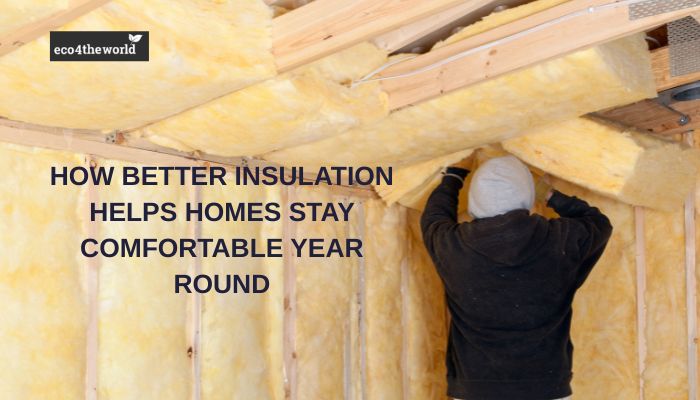
Better insulation helps homes stay comfortable by slowing down how fast heat moves in or out. Without enough insulation, heat escapes more easily during winter and enters more readily during summer. That makes it harder to keep indoor temperatures stable throughout the year.
But many homeowners don’t think about it until the warning signs start to show. You might notice certain rooms never quite warm up, or your energy bills keep climbing month after month. More often than not, poor insulation is the root cause.
At Eco 4 The World, we’ve seen this firsthand in homes across Australia. That’s why we put this guide together to walk you through the home insulation benefits. You’ll learn what good insulation does, where heat escapes most, and how to tell if your home needs an upgrade.
Keep reading to learn more.
How Insulation Improves Thermal Performance in Every Season
Insulation keeps a home comfortable by solving two opposite problems at once: holding heat in during winter and keeping it out during summer. We cover both below.
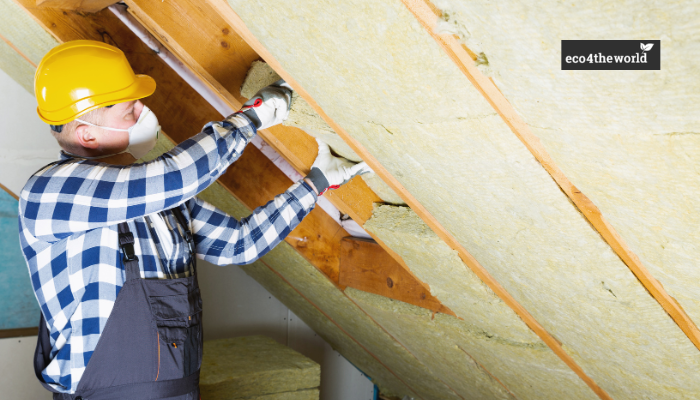
Keeping Heat Inside During Winter
In winter, heat naturally moves toward colder areas, which means it’s constantly trying to escape through your walls, ceiling, and floors. If no insulation is slowing that process, your heating system runs longer just to maintain a temperature that still feels uneven from room to room.
Good insulation cuts that heat loss, in our experience, by as much as 40–50% in well-insulated homes. That means your heating system holds the temperature you’ve set rather than working overtime to recover it.
Blocking Heat Out During Summer
Summer works in reverse. Instead of heat trying to escape, it tries to get in. Radiant heat from the sun pushes through your roof and walls. Without anything slowing it down, it builds up inside quickly. You might not notice it straight away, but when the temperature outside climbs and your rooms start feeling stuffy, your air conditioning struggles to keep up.
Insulation acts as a barrier against that heat gain. The slower the heat penetrates your home’s structure, the less your cooling system has to work to bring the temperature back down. The difference might only be a few degrees. But in the middle of a January heatwave, that’s the difference between a room you can sleep in and one you can’t.
Common Areas Where Homes Lose Heat
In most homes, heat escapes through four main areas: the roof and ceiling, walls, floors, and gaps around doors and windows. Let’s take a closer look at each one below.
Roof and Ceiling Spaces
Heat rises, and if there’s nothing to slow it down, it moves straight through the ceiling and escapes through the roof. That’s why the ceiling is usually the first place to look when a home struggles to hold warmth in winter or stay cool at night in summer.
Older homes are especially vulnerable, as this is often the least insulated part of the structure. In many cases, improving insulation in this one area alone can have a bigger impact than addressing any other single area. In fact, we’ve seen ceiling insulation alone cut heating and cooling costs by around 20–30% in homes that had little to no coverage before.
Walls
Walls don’t get as much attention as ceilings, but they account for a large portion of a home’s external surface area. That means they’re one of the main sources of heat loss when left uninsulated.
Cavity walls are usually where the problem starts. These are walls with an air gap between the inner and outer layers. When that cavity is not insulated, heat moves through it freely in both directions.
Fortunately, it’s one of the easier problems to fix, especially when walls are already being opened up for other renovation work. Insulated cavities help reduce heat loss and make it easier to maintain a consistent indoor temperature. They’re also less prone to condensation buildup, reducing the risk of hidden moisture damage inside your walls.
Floors
When heat loss comes to mind, floors are usually the last thing anyone thinks about. But ground floors can be a significant source of heat loss because they’re in constant contact with the cold ground beneath them.
In older homes with suspended timber floors, the problem is often worse. Gaps between the floorboards and the open space underneath allow cold air to rise from below while warm air escapes downward.
That constant exchange can leave floors feeling noticeably colder than the rest of the room. Insulating under the floor helps block that heat loss. It’s a smaller job compared to insulating walls or ceilings. But in homes where the floors have never been insulated, the improvement in ground-level comfort often surprises homeowners.
Gaps Around Doors and Windows
Gaps around door and window frames are easy to overlook. This is especially true in older homes where materials have shifted or settled over time. But even small openings let cold air in and warm air out. Across an entire house, those small gaps can collectively drive up heat loss in a home.
What makes them difficult to deal with is that they’re often easy to miss. That’s why it’s worth checking them regularly. Common ones to look for include:
- Around window frames, particularly where the frame meets the wall
- Along the bottom and sides of exterior doors
- Around keyholes, letterboxes, and door frames that have warped over time
- Where pipes or cables enter through external walls
Sealing them with draught-proofing materials or expanding foam is one of the more cost-effective improvements you can make. Unlike wall or ceiling insulation, most of it can be done without professional help.
How Home Insulation Improves Energy Efficiency and Reduces Costs
When insulation is missing, compressed, or poorly installed, the heating system has to work harder to maintain a comfortable temperature. That extra effort shows up in both energy use and household running costs. Depending on the climate zone, heating and cooling can account for 20% to 50% of the energy used in Australian homes. A large part of that is wasted through poor insulation.
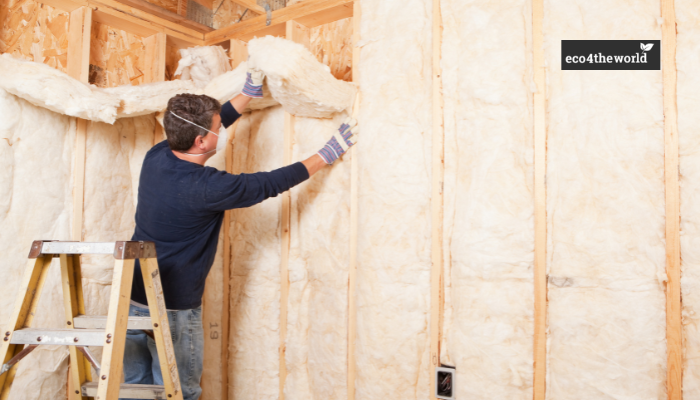
A well-insulated home avoids that loss by holding its temperature more effectively, so heating and cooling systems don’t need to run as often. According to the Australian Government, improving insulation in the roof, walls, and floors can reduce heating and cooling costs by over 50%. For a household spending $2,000 a year on energy, that’s potentially $1,000 back in your pocket.
Signs Your Home Needs Better Insulation
Most homeowners only realise their insulation isn’t working when something already feels wrong. By then, these signs have usually been there for a while:
- Uneven Room Temperatures: Some rooms feel noticeably warmer or cooler than others, regardless of how long the heating or cooling has been running. That unevenness usually points to gaps in insulation coverage across the home.
- Surfaces That Feel Cold to the Touch: If your interior walls or floors feel noticeably cold in winter, that’s a sign that heat is moving through them faster than it should. Well-insulated surfaces hold closer to room temperature even when it’s cold outside.
- Persistent Drafts: A persistent draught near walls, floors, or windows is worth paying attention to. If it’s there even when everything is shut, air is likely moving through gaps in your home’s insulation or building envelope.
- Older Homes That Have Never Been Upgraded: Homes built before modern insulation standards were introduced often have little to no insulation in the walls, ceiling, or floors. That makes them more prone to heat loss and higher energy costs.
If any of these signs are present, we recommend getting a professional insulation assessment. They can pinpoint where heat loss is occurring and recommend the most effective upgrades for your home.
Make Your Home More Comfortable Year-Round
Homes that stay warm in winter and cool in summer without high energy bills almost always have one thing in common: good insulation.
Done right, it’s one of the most cost-effective upgrades you can make to a property. It improves everyday comfort and reduces energy costs. It can also add real value at resale, since buyers often notice when a home holds temperature well.
Not sure where to start? Check for the signs we’ve covered in this guide first. And if you still have questions, the team at Eco 4 The World can point you in the right direction. We cover reducing waste, saving energy at home, and eco-friendly travel, so feel free to explore our site for more tips like this.


88IBET: Introduction, Features, and Platform Overview

Stacie Zabka: Life, Family, and Public Profile

HappyMod: A Complete Guide to the Popular Modded App Platform

Gareth Varey: The Architect of Modern Artist Management

Liza Tarbuck Illness: Health, Career, and Public Awareness

son simon now simon anthony blackburn: From Celebrity Son to Private Life
-
 Fashion8 months ago
Gareth Varey: The Architect of Modern Artist Management
-
 CALEBRITIES8 months ago
Liza Tarbuck Illness: Health, Career, and Public Awareness
-
 Business8 months ago
son simon now simon anthony blackburn: From Celebrity Son to Private Life
-

 Politics7 months ago
Jeffrey Donaldson Daughter Claire: Family Life, Privacy, and Personal Influence
-

 Entertainment8 months ago
Alice Bhandhukravi Illness: Separating Fact from Rumor and Understanding Her Health Status
-

 Politics8 months ago
Piers Pottinger: A Comprehensive Profile of a PR and Corporate Communications Veteran
-

 Sports8 months ago
Desislava Bozhilova Married: Exploring Public Curiosity and a Strongly Guarded Private Life
-

 Business8 months ago
Is Peter Cardwell Married? A Deep Dive Into His Life, Career, and Personal Relationships