
Blog
Robotic Arm Manufacturers: Complete Guide to Industrial Robotic Arms

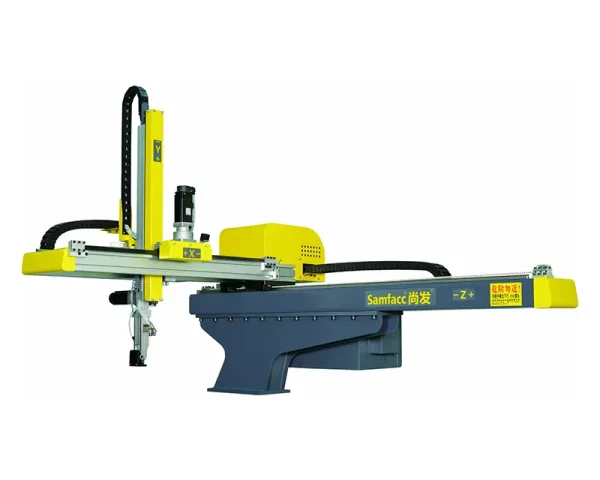
Robotic arm manufacturers design and produce automated machines that help businesses complete repetitive and precise industrial tasks. Robotic arms are now used in manufacturing, automotive production, electronics, packaging, logistics, food processing, welding, assembly, and many other industries.
A robotic arm can move materials, pick products, assemble components, weld parts, load machines, and perform inspection tasks. Its movements are controlled by software, motors, sensors, and robotic controllers.
Choosing suitable robotic equipment requires more than comparing specifications. Businesses should consider payload, reach, speed, accuracy, safety, programming, integration, maintenance, and long-term support.
What Are Robotic Arm Manufacturers?
Robotic arm manufacturers are companies that develop, build, and supply robotic systems for industrial and commercial applications. Their products can range from compact robotic arms to large machines designed to handle heavy loads.
Manufacturers may provide complete robotic systems or individual components. Many also offer software, controllers, grippers, sensors, installation, programming, and maintenance services.
A manufacturer with broad technical capabilities can help businesses select a robotic arm based on the production process. This can make automation planning easier and reduce compatibility problems.
How Do Industrial Robotic Arms Work?
A robotic arm uses a combination of mechanical joints, motors, controllers, sensors, and software. The controller sends instructions to the motors, which move the robot through programmed positions.
Different joints allow the arm to rotate or move in different directions. An end-effector is attached to the end of the arm to perform a specific task.
Feedback systems can monitor movement and provide information to the controller. This helps the robot maintain controlled and repeatable motion.
Main Types of Robotic Arms
There are several types of robotic arms. The right option depends on the application, workspace, speed, payload, and required movement.
Articulated robots have multiple rotary joints and are widely used in industrial production. SCARA robots are commonly used for fast assembly and pick-and-place tasks.
Cartesian robots move along linear axes. Delta robots are designed for high-speed handling. Collaborative robots, often called cobots, are designed for applications where people and robots may work in nearby areas.
Important Robotic Arm Components
A robotic arm consists of several important components. The mechanical structure provides movement and supports the payload.
Motors and drives control the joints. The robot controller manages programmed movements.
Encoders and other sensors provide feedback. The end-effector interacts directly with the product or workpiece.
End-effectors can include grippers, vacuum cups, welding tools, screwdrivers, cutting tools, and specialized production equipment.
Six-Axis Robotic Arms
Six-axis robotic arms are among the most flexible industrial robot designs. Their multiple joints allow movement across several directions.
They are often used for welding, painting, assembly, material handling, and machine tending.
The flexibility of a six-axis robot allows it to approach a workpiece from different angles. This makes it useful for complex production processes.
Payload and reach should be carefully matched with the application.
SCARA Robotic Arms
SCARA stands for Selective Compliance Assembly Robot Arm. These robots are commonly used for high-speed assembly and material handling.
SCARA robots can provide fast horizontal movement and accurate positioning. They are often used in electronics, packaging, pharmaceutical equipment, and small-component assembly.
Their compact design can also make them suitable for production environments with limited floor space.
Collaborative Robotic Arms
Collaborative robotic arms are designed for applications where robots and human workers may operate in close proximity under appropriate safety conditions.
Cobots can support tasks such as assembly, packaging, inspection, and material handling.
They often include features such as force monitoring and configurable safety functions. However, every collaborative application still requires an appropriate risk assessment and safety design.
Robotic Arms for Welding
Welding is a major application for industrial robots. A robotic arm can follow programmed welding paths with consistent movement.
Automated welding can help maintain repeatable production processes. It can also reduce the need for workers to perform highly repetitive welding movements.
Manufacturers can integrate robotic arms with welding power sources, positioners, sensors, and specialized software.
Robotic Arms for Assembly
Assembly processes often require accurate positioning. Robotic arms can place components, insert parts, tighten fasteners, apply adhesives, or perform other repetitive operations.
Robots can repeat programmed movements throughout a production cycle. Sensors and vision systems can add flexibility when component positions vary.
The robot’s end-effector should be selected according to the shape, size, and material of the components.
Robotic Arms for Pick and Place
Pick-and-place automation involves moving products between locations. Robotic arms can pick items from conveyors, trays, machines, or containers.
Grippers or vacuum tools can hold products during movement. Sensors can help detect product presence and position.
These systems are common in packaging, electronics, food processing, consumer goods, and general manufacturing.
Robotic Arms for Machine Tending
Machine tending involves loading and unloading equipment such as CNC machines, presses, and other production machinery.
A robotic arm can place raw material into a machine and remove the finished component after processing.
This type of automation can reduce repetitive handling and support consistent production cycles. The robot can also communicate with the machine controller for coordinated operation.
Vision and Sensor Integration
Vision systems allow robotic arms to obtain information about objects in their working area. Cameras can identify product location, orientation, size, or other characteristics.
This information can help a robot locate objects that are not positioned exactly the same way each time.
Other sensors can monitor force, distance, temperature, or product presence. Combining sensors with robotic arms can make automation systems more adaptable.
Benefits of Industrial Robotic Arms
Industrial robotic arms can provide consistent performance for repetitive tasks. They can operate for extended production periods without fatigue.
Automation may also improve production consistency and reduce manual handling. Robots can perform tasks in environments involving heat, repetitive motion, or other challenging conditions when properly designed for those applications.
Another advantage is programmability. A robotic arm can often be reprogrammed when production requirements change.
How to Choose Robotic Arm Manufacturers
When comparing robotic arm manufacturers, consider their experience, product range, technical support, and application expertise.
Start with the robot’s required payload and reach. Then evaluate speed, repeatability, workspace, mounting options, and controller capabilities.
Compatibility with existing machinery is also important. Ask about software, communication protocols, end-effectors, vision systems, safety equipment, spare parts, and training.
After-sales support can be especially important for long-term industrial automation projects.
Robotic Arm Installation and Integration
Installing a robotic arm involves more than placing the robot on the factory floor. The system must be integrated with machines, conveyors, sensors, tooling, and safety equipment.
Technicians may program robot movements and establish communication between different devices.
The completed system should be tested before production begins. Testing can verify movement, cycle times, safety functions, communication, and end-effector performance.
Maintenance and Technical Support
Regular maintenance helps protect robotic equipment and maintain production reliability. Maintenance may include inspection of joints, cables, motors, gear systems, sensors, and controllers.
Manufacturers may provide preventive maintenance schedules and technical documentation.
Access to replacement parts is also important. A reliable support network can help businesses troubleshoot problems and reduce unnecessary production downtime.
Factors Affecting Robotic Arm Costs
The price of a robotic arm depends on several factors. Robot size, payload, reach, speed, accuracy, and configuration can all affect the purchase price.
Additional costs may include controllers, grippers, sensors, vision systems, safety equipment, installation, programming, training, and maintenance.
Businesses should consider total ownership costs rather than only the initial equipment price. Energy consumption, spare parts, software, and service requirements can affect long-term expenses.
Frequently Asked Questions
What do robotic arm manufacturers produce?
They produce robotic arms and related equipment such as controllers, drives, software, end-effectors, sensors, and integrated automation systems.
Which industries use robotic arms?
Robotic arms are used in automotive, electronics, food processing, packaging, logistics, metalworking, pharmaceuticals, and general manufacturing.
What is a six-axis robot?
A six-axis robot has six controlled axes of movement, allowing it to perform flexible movements from different angles.
Are robotic arms programmable?
Yes. Industrial robotic arms can be programmed to perform specific movement sequences and production tasks.
How do I choose robotic arm manufacturers?
Compare technical capabilities, robot specifications, application experience, integration services, warranties, spare parts, training, and after-sales support.
Do robotic arms require maintenance?
Yes. Regular inspections and preventive maintenance can help maintain performance and identify potential problems early.
Final Thoughts
Robotic arm manufacturers play an important role in industrial automation. Their systems can help businesses automate assembly, welding, packaging, machine tending, material handling, inspection, and many other processes.
The right robotic arm depends on the task and production environment. Payload, reach, speed, accuracy, tooling, safety, integration, and maintenance should all be considered.
By carefully evaluating equipment and support services, businesses can develop a robotic automation system that fits their operational requirements and provides consistent performance over its working life.


HappyMod: A Complete Guide to the Popular Modded App Platform

Kicker and Kicker Online: A Complete Guide to Football Gaming and Entertainment

Blackops Uncovered: The Full Covert Operations Guide

Gareth Varey: The Architect of Modern Artist Management

Liza Tarbuck Illness: Health, Career, and Public Awareness

son simon now simon anthony blackburn: From Celebrity Son to Private Life
-
 Fashion7 months ago
Gareth Varey: The Architect of Modern Artist Management
-
 CALEBRITIES8 months ago
Liza Tarbuck Illness: Health, Career, and Public Awareness
-
 Business8 months ago
son simon now simon anthony blackburn: From Celebrity Son to Private Life
-

 Politics7 months ago
Jeffrey Donaldson Daughter Claire: Family Life, Privacy, and Personal Influence
-

 Entertainment8 months ago
Alice Bhandhukravi Illness: Separating Fact from Rumor and Understanding Her Health Status
-

 Politics8 months ago
Piers Pottinger: A Comprehensive Profile of a PR and Corporate Communications Veteran
-

 Business8 months ago
Is Peter Cardwell Married? A Deep Dive Into His Life, Career, and Personal Relationships
-

 Sports7 months ago
Desislava Bozhilova Married: Exploring Public Curiosity and a Strongly Guarded Private Life