
Blog
Banyan Aerial Roots: Nature’s Amazing Support System

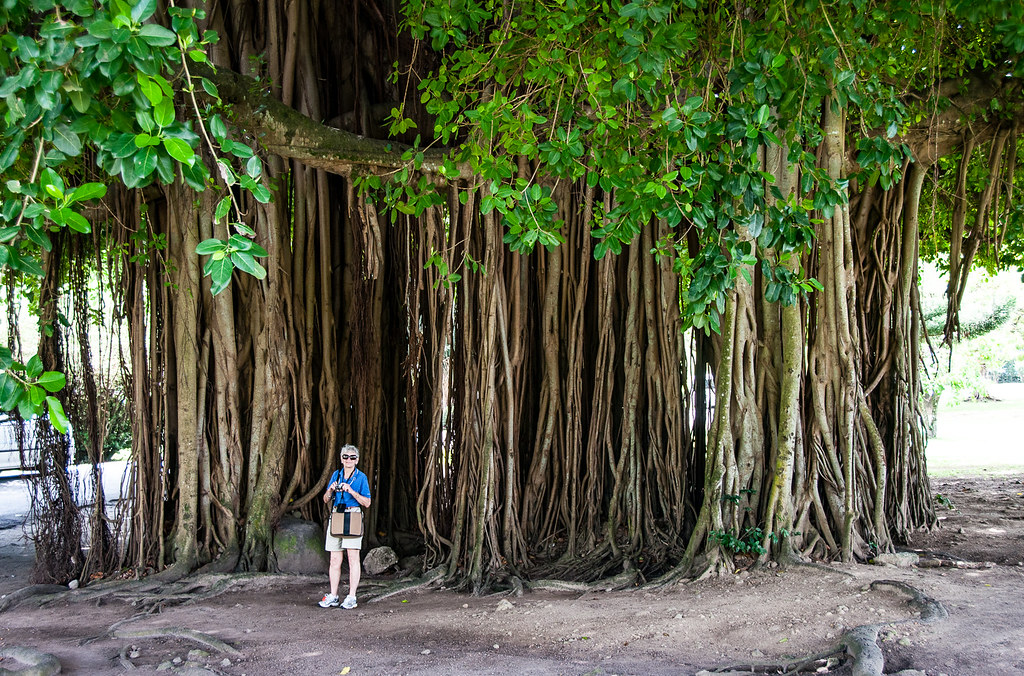
The banyan aerial roots are one of the most interesting features of the banyan tree. These roots grow from the branches and travel downward toward the soil. Once they reach the ground, they can become strong, woody structures that help support the tree. Over time, a single banyan tree can develop hundreds of aerial roots, creating the appearance of a small forest.
Banyan trees are famous for their wide canopies and spreading branches. Their aerial roots allow them to expand their growth and support heavy branches. This special root system also helps the tree survive in warm and tropical environments. Understanding how banyan aerial roots grow can help gardeners, students, and nature lovers appreciate the unique biology of this remarkable tree.
What Are Banyan Aerial Roots?
Banyan aerial roots are roots that develop from the branches or stems instead of growing directly from the ground. They begin as small structures hanging from the tree’s branches. Gravity causes them to grow downward. When conditions are suitable, they eventually reach the soil.
After entering the ground, these roots can absorb water and nutrients. They also become thicker and stronger with age. Some mature aerial roots look similar to tree trunks because they can become large and woody. This process gives mature banyan trees their distinctive appearance.
Why Do Banyan Trees Grow Aerial Roots?
The main purpose of banyan aerial roots is support. Banyan trees can develop very large and heavy branches. A normal root system may not provide enough structural support for branches that spread over a large area.
Aerial roots solve this problem by creating additional supporting structures. As the roots reach the soil, they form natural columns beneath the branches. These columns help carry the weight of the expanding canopy.
The roots can also contribute to water and nutrient absorption after reaching the ground. Therefore, they have both structural and functional importance.
How Do Banyan Aerial Roots Develop?
The development of banyan aerial roots happens gradually. A small root begins growing from a suitable branch. It usually appears as a thin, flexible strand hanging toward the ground.
The root continues growing downward because of gravity. Humidity and moisture can help it remain healthy while it develops. If the root reaches suitable soil, it can penetrate the ground and begin developing into a stronger root system.
With time, the root becomes thicker and more rigid. In mature banyan trees, some aerial roots can become large enough to resemble secondary trunks.
The Role of Aerial Roots in Tree Support
Support is one of the most important functions of banyan aerial roots. Banyan branches can spread horizontally over a very large area. As the branches become longer and heavier, they need additional support.
Grounded aerial roots provide this support. They act like natural pillars beneath the canopy. Instead of relying entirely on the original trunk, the tree distributes some of its weight through these additional roots.
This allows the banyan to continue expanding. In favorable conditions, a single tree can cover a surprisingly large area through its spreading branches and supporting roots.
How Aerial Roots Help Banyan Trees Spread
Banyan trees have an unusual method of expansion. Their branches can extend outward for many meters. Instead of stopping when branches become too heavy, the tree produces new aerial roots.
These roots move toward the ground and establish additional support points. Once established, the branches can continue spreading.
This growth pattern helps explain why some banyan trees appear more like forests than individual trees. The connected system of branches, roots, and supporting structures creates a large living network.
Banyan Aerial Roots and Water Absorption
Before reaching the ground, aerial roots are not as effective at absorbing soil water as established underground roots. However, once they enter moist soil, their role changes.
Grounded aerial roots can absorb water and minerals from the surrounding soil. This provides additional resources for the growing tree. A large banyan therefore benefits from having roots established in different areas beneath its wide canopy.
Moist tropical environments are especially suitable for this type of growth. High humidity can also support the early development of aerial roots before they reach the ground.
How Long Do Banyan Aerial Roots Take to Reach the Ground?
The time required for an aerial root to reach the ground varies. Root length, branch height, moisture, temperature, and environmental conditions all affect growth.
A root hanging from a low branch may reach the soil relatively quickly. A root developing from a high branch has much farther to travel.
Some aerial roots may remain suspended for long periods if they cannot find suitable soil. Others can develop rapidly under warm and humid conditions. Once a root reaches the ground, its growth and thickening can continue for many years.
What Happens After Aerial Roots Reach the Soil?
When an aerial root reaches the soil, it can begin producing a stronger underground root system. The root becomes anchored and gradually thickens.
As it matures, the structure can become woody and provide significant mechanical support. Older roots may look like additional trunks around the main tree.
This transformation is an important part of banyan growth. What begins as a thin hanging root can eventually become a major structural component of the tree.
Can Banyan Aerial Roots Be Grown at Home?
Banyan trees can produce aerial roots when growing conditions are suitable. However, the process is easier to observe in mature trees with large branches and sufficient humidity.
If growing a banyan in a container, space can become a major limitation. Banyan trees naturally want to spread and develop extensive root systems. Regular pruning and appropriate container management may be necessary for smaller specimens.
Bonsai enthusiasts sometimes enjoy growing banyan species because their aerial roots can create an impressive miniature-tree appearance.
Aerial Roots in Banyan Bonsai
Banyan species are popular among bonsai growers because aerial roots can add character and realism. Aerial roots can make a bonsai look older and more established.
Growers may encourage aerial root development by maintaining suitable humidity and moisture around selected branches. Once roots become established, they can contribute to the visual structure of the bonsai.
However, successful development requires patience. Roots need suitable moisture, warmth, and growing conditions. Excessive moisture can also create problems, so proper drainage remains important.
Common Problems With Banyan Aerial Roots
Although aerial roots are natural, they can sometimes create problems in managed landscapes. Banyan trees can become extremely large, and their roots may spread into nearby spaces.
Roots growing near buildings, sidewalks, drains, or underground infrastructure can become difficult to manage. Aerial roots that reach the ground can also form dense structures that change the surrounding landscape.
For this reason, banyan trees should be planted where they have enough room to mature. Proper planning can prevent many future maintenance problems.
How to Care for a Banyan Tree
Healthy banyan growth depends on suitable sunlight, water, soil, and space. Banyans generally perform well in warm climates with plenty of sunlight.
Young trees need regular watering while they establish themselves. However, constantly waterlogged soil can damage roots. Good drainage is therefore important.
Pruning may also be useful when a banyan is grown in a restricted space. Dead, damaged, or unwanted branches can be removed carefully. Large trees should be managed by trained professionals when pruning involves significant height or heavy branches.
Why Banyan Aerial Roots Are Important
Banyan aerial roots are more than unusual-looking structures. They are an important adaptation that allows the tree to support its enormous canopy and continue expanding.
They help create additional support points, strengthen spreading branches, and eventually contribute to water and nutrient uptake after reaching the soil. This makes the banyan tree highly adaptable to its environment.
Their growth also creates an extraordinary visual landscape. Mature banyans can develop many root columns that make the tree appear like a natural architectural structure.
Conclusion
Banyan aerial roots are a remarkable example of how plants adapt to their surroundings. They begin as roots growing from branches and slowly travel toward the ground. Once established in soil, they become stronger and can develop into thick supporting structures.
These roots allow banyan trees to support heavy branches and expand across large areas. They also contribute to the tree’s ability to obtain water and nutrients. From massive outdoor trees to carefully maintained bonsai, aerial roots are an important part of the banyan’s identity.
By understanding how these roots develop and function, we can better appreciate the unique growth strategy of one of nature’s most fascinating trees.


Integrated Aquatic Protection: Evaluating Advanced Emergency Response Programs

Rachel Caesar: Biography, Background, Career, and Personal Life

US Teacher Appreciation Day 2025: Date, History, Ideas, and Ways to Celebrate

Gareth Varey: The Architect of Modern Artist Management

Liza Tarbuck Illness: Health, Career, and Public Awareness

Jeffrey Donaldson Daughter Claire: Family Life, Privacy, and Personal Influence
-
 Fashion9 months ago
Gareth Varey: The Architect of Modern Artist Management
-
 CALEBRITIES9 months ago
Liza Tarbuck Illness: Health, Career, and Public Awareness
-
 Politics8 months ago
Jeffrey Donaldson Daughter Claire: Family Life, Privacy, and Personal Influence
-

 Entertainment9 months ago
Alice Bhandhukravi Illness: Separating Fact from Rumor and Understanding Her Health Status
-

 Business9 months ago
son simon now simon anthony blackburn: From Celebrity Son to Private Life
-

 Politics9 months ago
Piers Pottinger: A Comprehensive Profile of a PR and Corporate Communications Veteran
-

 Sports9 months ago
Desislava Bozhilova Married: Exploring Public Curiosity and a Strongly Guarded Private Life
-

 Entertainment9 months ago
Is Alice Bhandhukravi Married? A Complete Look at Her Personal Life and Career